
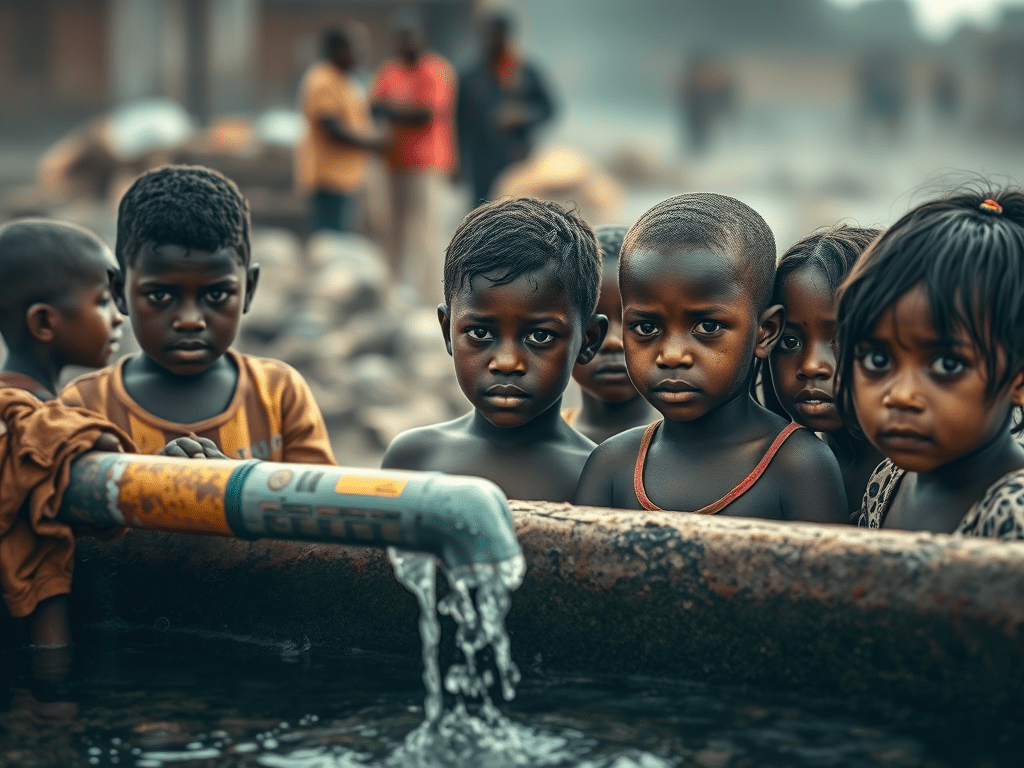
There are many threats to personal safety and human security that face the youth of today. These threats do not operate within the bounds of trivial concepts like national borders and can impact children across the globe, indiscriminately. Of the many intersecting societal hardships to be endured, thirst and famine, global conflict, and climate change seem to be the most detrimental. These challenges are often accompanied by additional threats such as displacement, disease, and dysfunction in the healthcare system. It is important to identify these issues, acknowledge the current system that perpetuates them, and raise awareness for the initiatives that seek to address them. If we continue to explore new avenues and expand on current ones, we can establish equitable solutions in the global fight to protect the world’s children from both natural and man-made phenomena.
While access to nutritious food is certainly imperative to survival, a child who is malnourished cannot improve their condition without access to clean water, making thirst and disease the more deadly battle. Unsafe water and poor sanitary conditions can cause or exasperate instances of malnourishment and disease in children. In fact, roughly half the cases of global malnourishment derive from inadequate access to a sufficient supply of water, hygiene, and sanitation complications (Selim, 2022). While climate change and conflict are major dilemmas of their own accord, they also exacerbate the already existing issues of thirst and famine for many communities. Roughly 450 million children throughout the globe reside in regions of high-water vulnerability, and children under five in conflict-ridden areas are 20 times more likely to perish from diarrheal disease than from the violent conflict itself.
Conflict is a great perpetrator of the conditions so many children of the world are forced to endure. Often, these conflicts involve attacks that either intentionally or inadvertently affect water infrastructure which leads to deadly consequences. Currently, one in four children reside in war and disaster ridden countries, and 28 million are driven from their homes in search of refuge (Fore,2019). When conditions like drought and conflict force children and families to flee their homes, they often become more vulnerable to abuse and unsafe conditions that can threaten their health and well-being in other measurable ways. Aside from the devastating effects on health, these issues also contribute to the displacement of 75 million of the world’s youth, forcing many to abandon their hopes and aspirations. According to UNICEF Executive director, Henrietta H. fore, this tragedy can create “a lost, disillusioned, and angry generation of uneducated children [which] is a dangerous risk that could cost us all.” (Fore,2019).
Climate change is an issue that compounds with all the aforementioned issues the children of the world already face. It is often the driving force behind thirst and famine and is intensified by global conflict. The increasingly destructive natural disasters driven by climate change are contributing to an increase in drought and flooding. This is greatly affecting food production. More than ½ a billion children live in areas that are highly susceptible to flooding. Rising water temperatures add to these deadly conditions, increasing the impact of waterborne disease. On the other end of the spectrum, almost 160 million children live in areas highly susceptible to drought. This collection of global challenges impacts air and groundwater quality, leaving 300 million children forced to survive in toxic levels of environmental pollution; over six times higher than international guidelines suggest. Sadly, these poor circumstances lead to roughly 600,000 deaths in children under five (Fore, 2019). It is estimated that one in four children will live in such areas facing these clean water concerns by the year 2040. Luckily, there are already many programs and initiatives underway, through organizations such as UNICEF, that are addressing these issues and working toward equitable solutions.
One in five deaths of children under five is due to wasting; a dangerous form of malnutrition. A ready-to-use, energy-dense, micronutrient paste called RUTF has been developed to treat children suffering from wasting. UNICEF distributes around 80 percent of the world’s supply of RUTF to help reduce this alarming statistic (RUTF article). They also work together with change-driven partners on projects like groundwater extraction, regional efforts to source safe and sustainable water, and the development of monitoring and warning systems to alert governments and communities of climate and environmental related issues, giving them more time to act and mitigate potential threats (Selim, 2022). They also work a lot with the world’s youth, giving them access to a platform that allows their voice to be heard and respected. Sixteen-year-old Claire from Zimbabwe used her role as a youth representative and iWill ambassador to stress the difference between equity and equality. She explains how equality looks like everyone getting the same resources and opportunities, but it only works if the starting line is the same point for everyone. Equity, on the other hand, means solutions suited to everyone’s needs depending on their circumstance so that everyone can have access to the same starting line (Clair 2023). Essentially, you can’t have equality without first having equity. Insights with such depth from someone so young is very inspiring and helps spread awareness of the many issues the children of the world are forced to face daily.
To combat issues related to global conflict, UNICEF has collaborated with partners to develop a digital education platform called a ‘learning passport’ to provide access to education for refugees, migrants, and displaced youth. They also utilize school campaigns to promote mental health awareness, and advocate for community programs and social policy reform geared towards supporting the development and well-being of children, and equitable access to education and opportunity. Sixteen-year-old Jona from Montenegro uses her role as a youth reporter to stress the need for education (Jona Video). Though she doesn’t believe in role models, and instead believes we should all inspire one another to be the best versions of ourselves, she makes a good candidate for one herself through her example and efforts as a young activist.
UNICEF has contributed to the mitigation of climate change by using technology to develop advanced water systems to help deliver safe water in places like Madagascar, and safeguarding water supplies in the Pacific Islands through the Drinking Water Safety and Security Planning (DWSSP) initiative (Annual Report, 2021). They also strengthen school structures, support health care systems, and educate and prepare communities of high risk for climate events. Designing and implementing sustainable solutions is another way UNICEF contributes to addressing the threats to our world’s children, either through finding innovative ways to reduce coal consumption and improve air quality, to spreading awareness of individual youth efforts, such as young Aditya from India and his initiative to eliminate single-use plastics. His targeted approach of convincing hotels and restaurants to eliminate their use of single-use plastics, as well as his efforts to influence individual social responsibility has contributed to the elimination of 26 million plastic straws, and that figure continues to rise (Aditya 2023).
It is important to understand that though these issues might not be something many of us face in our own daily lives today, they will be in the days of tomorrow if we don’t take the necessary steps now to combat them. My son and I just recently recovered from a bad stomach virus that has been going around. Learning so much about the state of our planet and the many children who perish from something similar to what my son and I had just endured really amplified the impact of these critical threats. Being able to open my fridge and give him Gatorade, or give him ice-cold filtered water in an instant to help soothe and heal him is something we often overlook as a state of privilege. The ease of access I have to this essential resource allowed my child to live while so many others who do not have access will die. Equitable access to vital resources is the single most important step to the sustainability of our planet. We are all entitled to live our lives with dignity, regardless of where we live.
References
⋮
Fore. 2019. “Open Letter to the World’s Children.” UNICEF. Accessed October 2023. https://www.unicef.org/child-rights-convention/open-letter-to-worlds-children.
Selim, S. 2022. “4 Things You Need to Know About Water and Famine.” UNICEF Stories. Accessed October 2023. https://www.unicef.org/stories/4-things-you-need-know-about-water-and-famine.
UNICEF. n.d. “Ready-to-Use Therapeutic Food (RUTF).” Accessed October 2023. https://www.unicef.org/nutrition/RUTF.
UNICEF USA. 2021. Annual Report 2021. Accessed October 2023. https://www.unicefusa.org/about/publications/annual-report-2021?utm_content=TOFU-Unstoppable&ms=CPC_MAR_2022_Brand_20220316_google_TOFU-Unstoppable_delve_None&initialms=CPC_MAR_2022_Brand_20220316_google_TOFU-Unstoppable_delve_None&gclid=CjwKCAjw9qiTBhBbEiwAp-GE0WNMV1grlKbiWsUy0iKbQlBTHanqCb8lz2hgclOokUlBEU6eiN1MOxoCBeMQAvD_BwE.
Claire. 2023. “Video.” YouTube video, 6:00. Accessed October 2023. https://www.youtube.com/watch?v=_AwTx9mw9hU&list=PLzfcpxK7Y8rRVw9JMuq3euM10CZHD0sGu&index=6.
Jana. 2023. “Video.” YouTube video, 7:00. Accessed October 2023. https://www.youtube.com/watch?v=UKXen_fVh1E&list=PLzfcpxK7Y8rRVw9JMuq3euM10CZHD0sGu&index=7.
Aditya. 2023. “Video.” YouTube video, 5:00. Accessed October 2023. https://www.youtube.com/watch?v=EKcNJ-0YGso&list=PLzfcpxK7Y8rRVw9JMuq3euM10CZHD0sGu&index=5.



 Jenny Lynx Blog
Leave a comment