

A recent article from The Journalist’s Resource disseminated five studies examining the current state of gender bias in U.S. political news coverage. Researchers found consistent patterns reflecting societal gender stereotypes, including underrepresentation of women, portrayals of gender-based social roles, distinctions between female communion and male agency, and an emphasis on female candidates’ attractiveness or sexuality. This analysis supports the idea that the media mirror the organizational power of hegemonic masculinity by reinforcing gender constructs that uphold Western patriarchal culture. The specific metrics analyzed included overall coverage, disproportionate focus on appearance, and emotional displays between men and women (Merrefield 2024). The findings align with broader cultural attitudes toward gender, revealing systemic biases ingrained in media representations.

The first study analyzed over 500,000 news articles from major outlets, involving 1,070 participants—of whom only 214 were women. It found that women received less coverage on topics like national security and the economy compared to their male counterparts. According to Etaugh and Bridges, “this imbalance of power and value is reflected in the underrepresentation of females in media around the world” (2018). The second study examined language used in news stories to describe male and female politicians. It identified potential male-favoring bias when describing traits like competency and integrity—traits that are often gender-neutral but tend to favor men. Moreover, stereotypical language emphasizing physical appearance—such as “beautiful” or “stunning”—was more frequently associated with female politicians, reinforcing Etaugh and Bridges’ assertion that women are more likely to be defined by their looks (2018). The fifth study further underscores this emphasis, noting that “generally, photographs of women tend to be medium- or long-range, with more emphasis on their bodies” (Merrefield 2024). The third and fourth studies focused on how feminine stereotypes and gendered roles are maintained, often framing women through their professional or personal roles—such as spouse or parent—rather than as political actors.
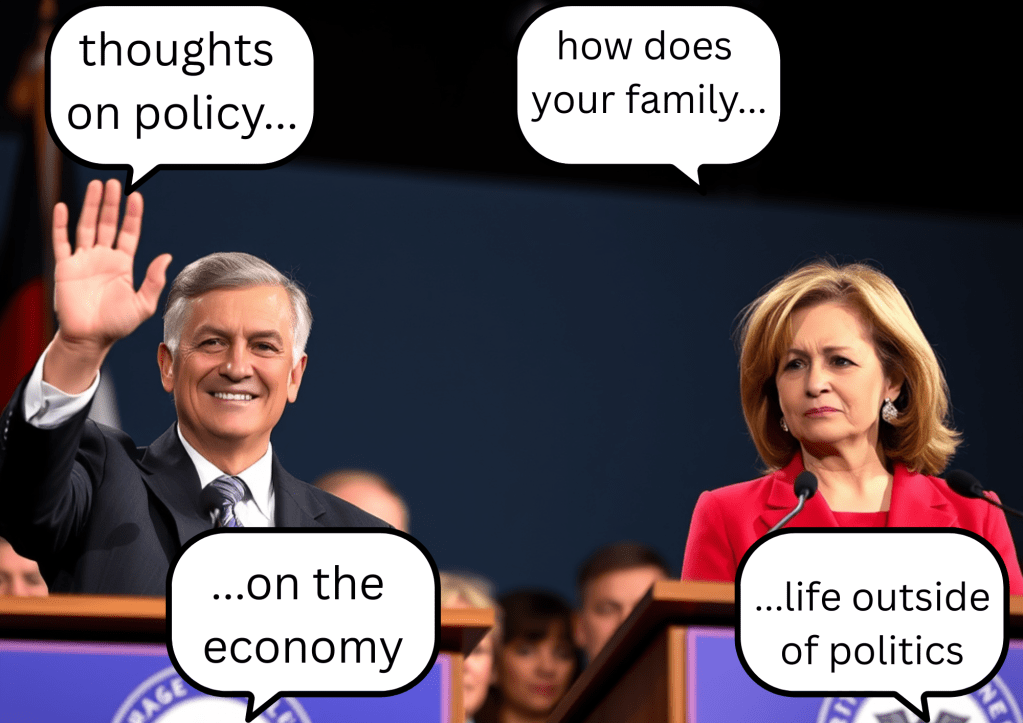
The Journalist’s Resource article itself is not biased; rather, it highlights how biased coverage can influence societal attitudes and behaviors toward women in politics. Juliet A. Williams, a UCLA gender studies professor, discusses the dangers of sexist attacks, warning that “the higher the political stakes, unfortunately, the lower people will sink in order to invalidate a candidate who is a woman” (Goldberg 2024). Such sexist attacks are deeply harmful, as they can perpetuate negative stereotypes and deter young women from pursuing leadership roles. For example, Axios reports that a study by the Center for Countering Digital Hate found that out of 1,000 comments on Instagram reporting abuse of female politicians, 93% remained visible the following week, with 77% containing gender-specific terms (Lotz 2024). Experts in women and gender studies argue this behavior reinforces damaging stereotypes and discourages female political participation (Goldberg 2024).
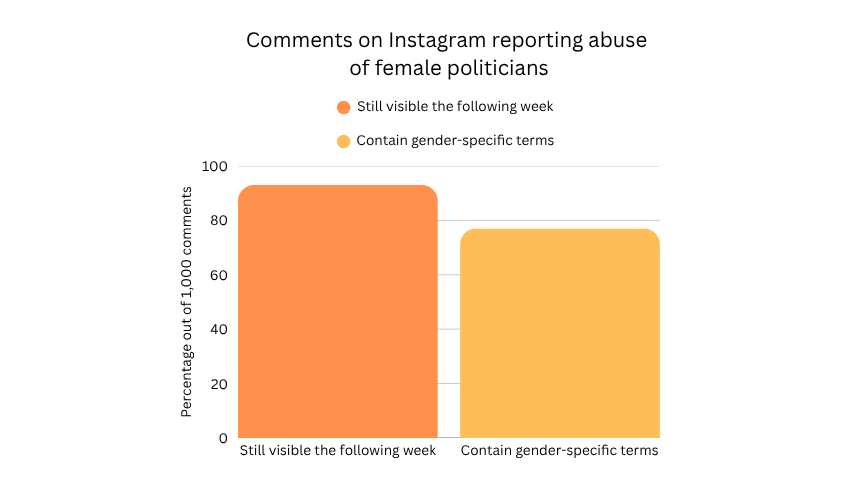
Overall, when combined with the Instagram abuse study, the media portrayal of women discussed in the article demonstrates how media socializes and perpetuates gender constructs and expectations. Recognizing these biases is the first step toward change, but it is not enough. Media outlets, journalists, and consumers alike must actively challenge and dismantle stereotypes by promoting balanced coverage that respects women’s agency and contributions. As citizens and consumers of media, we all have a responsibility to demand fair and equitable representation of women in politics—because a truly democratic society cannot thrive on stereotypes and inequality. It is time to hold media accountable and advocate for a more inclusive and just political discourse.
Works Cited
Etaugh, C., and J. S. Bridges. 2018. Women’s Lives: A Psychological Exploration. Routledge.
Goldberg, A. 2024. “Kamala Harris, Megyn Kelly and Why the Sexist Attacks Are So Dangerous.” USA Today, July 31. https://www.usatoday.com/story/life/health-wellness/2024/07/31/kamala-harris-sexism-election/74618268007/
Lotz, A. 2024. “Instagram Failed to Act on 93% of Abusive Comments Targeting Female Politicians, Study Finds.” Axios, August 14. https://www.axios.com/2024/08/14/instagram-abuse-kamala-harris-female-politicians
Merrefield, C. 2024. “How the Media Cover Women in Politics: 5 Recent Studies to Know.” The Journalist’s Resource, September 11. https://journalistsresource.org/media/gender-bias-news-politics/


 Jenny Lynx Blog
Leave a comment